
Key Takeaways
- Fire alarms detect emergencies, while guards protect through human judgment and proactive monitoring.
- Human monitoring is critical when systems are offline or in high-risk conditions.
- SGS provides both proactive hazard recognition and compliance support.
- Combining alarms and fire watch guards delivers optimal safety and peace of mind.
Fire departments in the U.S. respond to about 1.38 million fires annually, resulting in 3,920 deaths and 11,780 injuries. It highlights how fire safety is critical for businesses, commercial properties, and public spaces.
While fire alarms provide essential automated detection, human monitoring is often indispensable. Properties without active detection during outages can experience up to three times higher fire losses. While proactive monitoring can reduce fire incidents by 30–50%.
Understanding the difference between fire watch guards vs fire alarms helps ensure safety, compliance, and peace of mind. Our team offers continuous monitoring, risk prevention, and professional response 24/7.
What Is a Fire Alarm System?
Fire alarm systems detect smoke, heat, or flames and alert occupants and emergency services through sensors, control panels, and audible or visual alarms.
However, alarms cannot patrol properties or assess hazards proactively. During power outages, malfunctions, or sensor failures, a property may be left vulnerable. Consequently, human oversight is essential in many situations.
What Is a Fire Watch Guard?
Fire watch guards provide active monitoring and rapid response. They patrol interior and exterior areas, detect risky conditions, report hazards immediately, and communicate with fire response teams.
Human vigilance is particularly critical when alarm systems are offline for maintenance, during construction, or when flammable materials are present. By combining professional judgment with real-time action, guards enhance the effectiveness of fire safety systems.
Fire Watch Guards Vs Fire Alarms
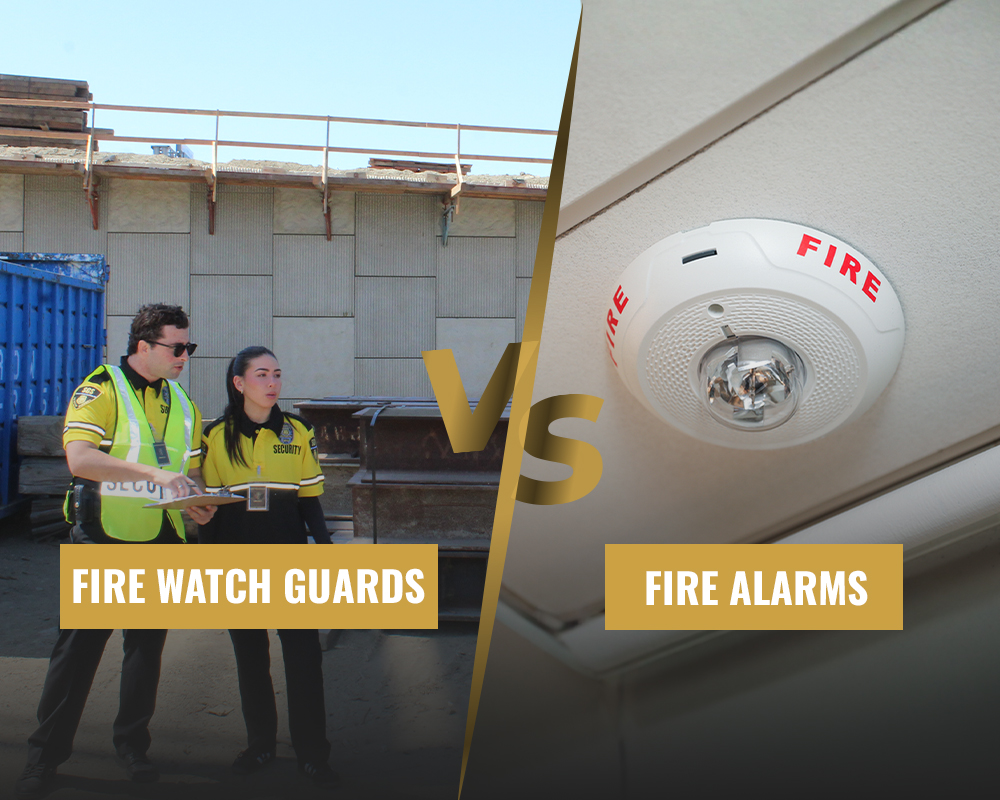
When it comes to fire watch guards vs fire alarm systems, there are a few differences. Firstly, fire alarms detect. While fire watch guards proactively monitor and intervene. Here is a brief rundown of the difference between the two:
| Feature | Fire Alarm System | Fire Watch Guard |
|---|---|---|
| Detection Type | Automated sensors | Human observation |
| Response | Alerts occupants only | Investigates and acts |
| Coverage During Outages | Limited | Full 24/7 monitoring |
| Compliance Support | Meets standard codes | Required for temporary compliance |
| Reliability in Adverse Conditions | Sensor limitations | Guards adapt patrols as needed |
| Proactive Prevention | Low | High (guards spot hazards early) |
Overall, fire watch guards are crucial, especially during high-risk periods.
Effectiveness of Fire Safety Measures
| Protection Type | Normal Conditions | During System Failures | Proactive Hazard Prevention |
|---|---|---|---|
| Fire Alarm Systems | High | Low | Low |
| SGS Fire Watch Guards | Medium | High | High |
| Combined (Alarms + Guards) | Very High | Very High | Very High |
Using both systems together provides the most reliable coverage, particularly in compliance-critical or high-risk environments.
When Is a Fire Watch Guard Required?
Fire watch guards are necessary in situations such as:
- Fire alarm outages or maintenance
- Construction or renovation increases hazard risk
- Compliance-mandated situations by local authorities
- Malfunctioning or damaged fire protection equipment
In these scenarios, guards maintain both safety and regulatory compliance.
Need Active Fire Protection Beyond Alarms?
Ensure 24/7 coverage with trained fire watch guards who patrol, detect hazards, and respond in real time.
Can a Fire Alarm Replace Fire Watch Guards?
Fire alarms can detect danger, but they cannot patrol, assess risks, or take action. Fire watch guards provide constant human oversight, spotting hazards early, and responding in real time. When it matters most, SGS delivers the active protection that alarms alone cannot.
When Do You Need Both Fire Watch and Fire Alarm Systems?
Both systems are most effective in:
- High-occupancy buildings where the safety of many individuals is at stake.
- Large commercial facilities where alarms may not cover every area of risk.
- Temporary system outages to ensure compliance and safety.
- High-risk periods, such as construction or renovation
Consequently, combining alarms and fire watch guards delivers a comprehensive fire safety solution.
Why Partner with SGS?
Our team at Security Guard Solutions (SGS) provides:
- Custom patrol schedules and high-risk monitoring
- Compliance support for local fire safety regulations
- 24/7 fire watch patrols tailored to your property needs
By partnering with SGS, you gain proactive fire protection, rapid response capabilities, and professional oversight that technology alone cannot provide.
Get Custom Fire Safety Coverage Today
Secure your property with professional fire watch guards tailored to your site and risk level. Fast, compliant, and reliable.
FAQs
Are fire alarms enough on their own?
Fire alarms detect fires, but cannot patrol, prevent, or respond proactively. Human monitoring ensures complete protection.
When is a fire watch guard legally required?
A fire watch guard is required when fire alarms aren’t working, during construction, or anytime local fire codes say someone must stay on constant watch for fire.
Can one guard cover a large facility?
Coverage depends on facility size; SGS customizes patrol schedules and assigns multiple guards when needed.
Do fire watch guards work with existing alarm systems?
Yes. Guards complement alarms by providing human oversight, redundancy, and immediate response.
How does SGS ensure compliance and safety?
Through trained personnel, tailored patrol schedules, consistent hazard reporting, and adherence to local regulations.