Key Takeaway
- Film productions rely on layered security to protect scripts, footage, cast, equipment, and confidential information.
- NDAs, watermarks, secure platforms, and access restrictions protect digital and written content, but they can’t control a physical location.
- Security guards add the physical layer, controlling entrances, monitoring restricted areas, and managing visitors.
- Strong film production security reduces the chances of unauthorized access, photography, recording, and equipment loss.
Introduction
A film set may look tightly controlled, but it can be more exposed than it seems. Cast members often shoot outdoors; equipment may sit overnight, and dozens of crew members, vendors, and visitors move through the same location. Any of them could capture a photo, script page, or short video that reveals a major plot of detail.
Leaks rarely begin with sophisticated hacking. More often, they happen when someone gets too close to a script, monitor, costume, or restricted area. So, how are film scripts kept secret when so many people handle a production?
Digital safeguards are only part of the solution. Physical security is equally important, with modern film production security focused on preventing script and footage leaks before they happen.
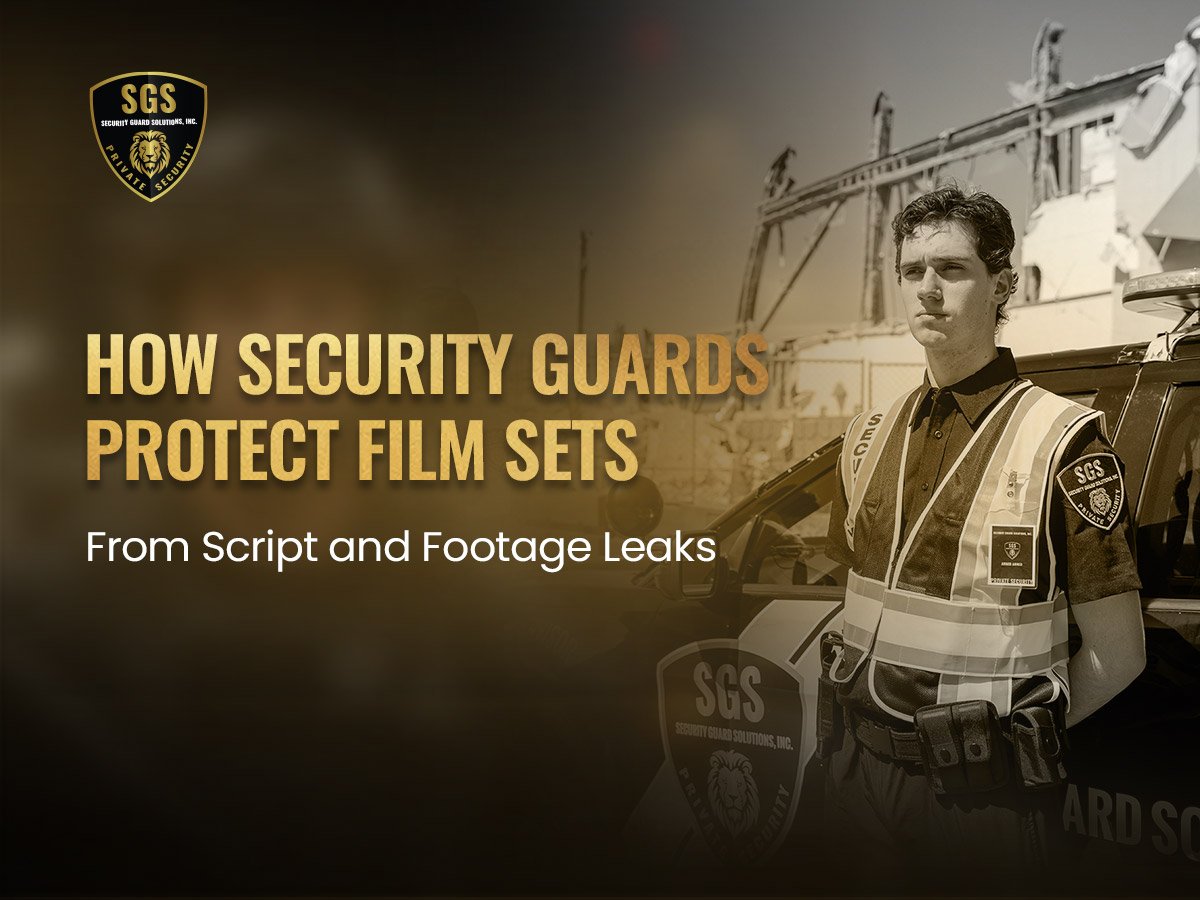
Security guards help protect film sets from script and footage leaks by controlling access, monitoring restricted areas, managing visitors, protecting equipment, and discouraging unauthorized photography or recording. They don’t replace cybersecurity, NDAs, or secure content platforms; they provide the physical layer that supports the production’s broader confidentiality strategy.
Why Do Movie Leaks Happen?
Why do movie leaks happen even at major studios with strict confidentiality rules in place? There’s rarely a single cause.
A leak can start with an unauthorized person accessing a script, a phone photo of a filming monitor, a scene recorded from outside a fence line, or a crew member posting behind-the-scenes details online. Other common contributors include:
- Too many people having access they don’t actually need.
- Poorly controlled entrances at temporary locations.
- Unsecured production documents or unattended devices.
- Unauthorized photography near active sets.
- Visitors or bystanders getting closer than the production allows.
- Storage and equipment areas left unattended between shoot days.
A recent example shows how quickly a script leak can become a public spoiler. In March 2026, the full script for Zach Cregger’s upcoming Resident Evil film reportedly appeared online, with details later matching parts of the movie’s official teaser.
The incident also shows why protecting confidential production material requires more than keeping files secure; controlling who can access sensitive information and production environments matters too.
How Are Film Scripts Kept Secret?
How are film scripts kept secret when hundreds of people may work on production before release? Usually through several overlapping controls.
Studios generally limit scripts to people who need them, often using confidentiality agreements. Other common measures include:
- Using secure, access-controlled script platforms.
- Limiting downloads and copies.
- Applying individualized watermarks.
- Minimizing printed copies and securely destroying them.
- Using project code names.
Major studios use multiple layers of production security, including restricted script access, watermarking, confidentiality agreements, and secure digital platforms. Netflix and Amazon MGM Studios both include these measures in their production-security guidance.
However, digital controls cannot address every physical risk. A watermark cannot stop someone from photographing a printed page, and a secure file cannot prevent an unauthorized person from entering a production office.
Digital controls protect information within a system. Physical security helps protect the people, places, and assets where that information exists.
This is why controlled access, visitor management, restricted areas, and on-site security remain important parts of production security.
How Do Film Sets Prevent Footage Leaks?
How film sets prevent footage leaks comes down to protecting the footage and the space it’s captured in.
Raw footage doesn’t need to leave a secure server to become a problem; a phone pointed at a playback monitor or a costume reveal is enough. Productions typically reduce this risk by:
- Restricting access to filming areas and equipment zones.
- Limiting who can view or photograph monitors and playback stations.
- Escorting visitors without production credentials.
- Using barriers or privacy screens at exposed outdoor locations.
- Tracking sensitive drives and devices through the day.
- Maintaining coverage after wrap, when gear may sit unattended.
Long-lens cameras and consumer drones add another layer at public locations, capturing a scene from well outside a standard perimeter, which is why more productions now treat overhead sightlines as part of location planning, not an afterthought.
The goal isn’t making a leak impossible. It’s closing off as many chances as possible for someone to view, record, or remove material they aren’t authorized to see.
What Role Do Security Guards Play in Preventing Film Leaks?
Security guards don’t replace cybersecurity or confidentiality agreements. They provide the physical layer that helps those measures actually hold up on location, where conditions change daily, and enforcement can’t happen from a server room.
1: Controlling Access to the Set
A production can involve cast, crew, vendors, drivers, and visitors moving through the same footprint. Not everyone needs access to every area. Guards can verify credentials at entry points, manage vendors and visitor sign-in, and keep restricted zones limited to people who are actually supposed to be there, especially important on temporary locations that don’t have any built-in building security.
2: Monitoring Restricted Areas
Production offices, equipment storage, cast trailers, and playback stations all warrant a closer level of attention than a general set perimeter. A trained officer stationed near these areas can flag unauthorized entry or suspicious activity before it becomes a bigger issue.
3: Managing Visitors and Crowds
Public locations attract fans, photographers, and passersby, particularly when recognizable actors are on set. Guards can hold a perimeter, direct foot traffic, and keep unauthorized people from getting close enough to shoot photos of a scene or a script left in view.
4: Reducing Unauthorized Photography
No guard can control every phone pointed from a public sidewalk. But within the production’s controlled footprint, guards can enforce no-photo zones. They can also intervene when someone crosses a boundary. Guards can then escalate the situation according to the production’s procedures.
This provides a meaningful backstop to policies that restrict recording and social media sharing.
5: Protecting Equipment and Production Assets
Cameras, lighting, vehicles, props, and costumes represent significant investment and often sit at a location for hours or days. A visible security presence deters casual theft and tampering, and gives the production a point of contact if something looks out of place.
6: Providing Overnight Coverage
The security risk doesn’t end when the crew wraps for the day. Equipment and temporary structures can remain at an outdoor or remote location overnight, well after normal activity has stopped. Overnight coverage keeps that exposure window from turning into a loss.
Why Script Security Matters in Film
Why script security matters in film goes beyond keeping a few plot points off social media. A leaked script can expose a major twist, a surprise casting choice, an ending, or an unannounced location. It can also undermine a marketing plan built around carefully timed reveals.
A 2026 lawsuit over the unreleased film Fortitude highlights these risks. The film’s producer sued Netflix, alleging that a hard drive containing an unencrypted copy of the film was stolen from Netflix’s Los Angeles offices. Netflix disputes responsibility.
The incident highlights how quickly sensitive film content can fall outside a production’s control. Strong script and physical security measures can help reduce the risk of unauthorized access and premature leaks.
Script confidentiality isn’t a minor operational detail. It helps protect the audience experience and gives studios greater control over when and how a project is revealed.
Ways Studios Prevent Spoilers and Film Leaks
Ways studios prevent spoilers usually combine several practical measures rather than relying on any single one:
1. Limit access to people with a genuine need for the material.
2. Require NDAs before anyone sees sensitive scripts or footage.
3. Watermark documents so leaked copies can potentially be traced.
4. Restrict photography and recording near active filming.
5. Manage visitors and keep them within approved areas.
6. Control sightlines at public or exposed locations.
7. Use code names for scripts, characters, and shooting schedules.
8. Secure equipment and storage areas, including after hours.
9. Maintain coverage during the hours a location is most vulnerable, overnight, during setup, and after wrap.
How Productions Protect Confidential Information
How productions protect confidential information typically comes down to four layers working together:
- Digital layer — secure platforms, access controls, restricted downloads.
- Policy layer — NDAs, need-to-know access, production rules.
- Physical layer — controlled entrances, barriers, restricted areas.
- Human layer — security personnel who verify, monitor, and respond in real time.
The human layer is what connects the other three. A watermark can identify a leak after the fact; a guard can help prevent the person from ever reaching the material in the first place.
How Security Guard Solutions (SGS) Protects Film Productions
A film set has too many moving parts for security to rely on access rules alone. Someone can enter the wrong area, get too close to a restricted zone, or access equipment after the crew has wrapped.
At Security Guard Solutions, our film production security services add a trained physical presence where your production needs it most. Our guards can control access, monitor restricted areas, manage visitors, protect equipment, and help prevent unauthorized photography or recording.
Every production has different locations, schedules, and risks. We can help build coverage around yours. Contact SGS to discuss your production’s security needs and create a plan that helps keep your set, people, and confidential content protected.
Conclusion
Keeping a film’s secrets under wraps takes more than passwords and signed agreements. How are film scripts kept secret when so many people are involved? Productions rely on several layers of protection, from secure systems and access controls to physical security on location.
Security guards help put those rules into practice by controlling access, monitoring sensitive areas, managing visitors, and protecting equipment. With the right film production security, productions can reduce opportunities for unauthorized access and keep scripts, footage, and other confidential details protected until release.
FAQs
Do movie sets use security guards to prevent leaks?
Yes. Security guards control access, monitor restricted areas, and manage visitors. They also help prevent unauthorized photography or recording on set.
What happens if a film script gets leaked?
A leaked script can reveal plot points, casting details, or other confidential information. Productions may tighten access controls, review security measures, and take legal action.
Who is responsible for keeping a film set secure?
Security is usually shared between production management, studio security teams, location staff, and hired security companies, depending on the production’s needs.
Can NDAs alone stop a film leak?
No. NDAs provide legal protection but cannot physically stop someone from accessing or photographing sensitive material. Physical security adds another layer of protection.
How much does film set security cost?
Costs depend on the number of guards, location, coverage hours, shoot length, and security risks. Productions typically receive a customized quote based on their needs.