Key Takeaways
- Executive protection prioritizes individual safety over physical property lines.
- Proactive planning and discreet prevention matter more than visible muscle.
- Corporate leaders, public figures, and targeted families require this protection.
- Effective security blends seamlessly into daily life to mitigate risk.
There’s a moment, usually quiet, often unexpected, when someone realizes that their success has made them visible in ways they never planned for. A business deal closes publicly. A leadership role puts a name in the news. A family moves into a neighborhood where their profile suddenly feels like a liability rather than an achievement.
That’s usually when the question comes up: do I actually need executive protection?
It’s a fair question. And honestly, most people asking it don’t fully know what executive protection even means beyond what they’ve seen in movies. So, before anything else, let’s clear that up.
What Is Executive Protection, Really?
Executive protection is a structured, people-focused security discipline designed to keep specific individuals safe, not buildings, not assets, not locations. People.
That distinction matters more than it sounds. A standing guard secures a perimeter. An unarmed officer monitors access points. But what is executive protection in practice? It’s an approach that follows the person, through their schedule, their travel, their public appearances, their daily routine. The protection moves with them.
Built Around the Individual, Not the Threat
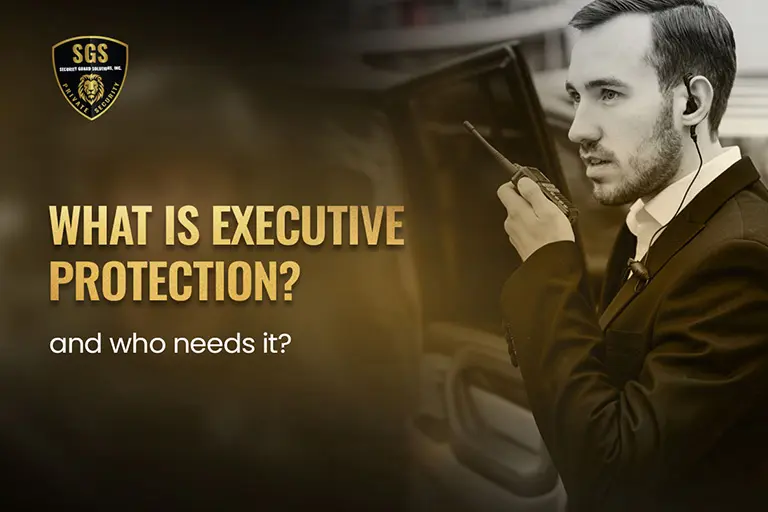
It’s also much quieter than most people expect. Executive protection isn’t about visible muscle or intimidating presence. Done well, it’s almost invisible.
The agent blends into the environment, handles logistics in the background, and keeps the client focused on their day rather than their security concerns.
The scope of the role shifts depending on the client’s life. Someone with a predictable daily schedule in a low-risk area needs a very different plan than someone traveling internationally for high-stakes negotiations.
That flexibility, the ability to build around a person’s actual life, is what separates executive protection from standard security coverage.
What Does an Executive Protection Agent Do?
This is where people are often surprised. The work looks nothing like the action sequences on screen.
Understanding what an executive protection agent is really means understanding someone who spends most of their time thinking ahead. Before a client sets foot somewhere, the agent has already been there, checking routes, assessing entry and exit points, identifying potential vulnerabilities, and coordinating with drivers, venue staff, or advance teams.
On any given day, that work includes:
- Planning routes and identifying alternates in case of disruption.
- Managing safe arrivals and departures at unfamiliar locations.
- Monitoring the environment for anything that feels out of place.
- Providing discreet escort during travel, events, or sensitive meetings.
- Staying in communication with the client’s team, family, or staff.
The best executive protection agents are calm, observant, and two steps ahead. They’re not reacting; they’re preventing.
That shift from reactive to proactive is the core of what makes this kind of protection effective.
Who Needs Executive Protection?
Here’s where the conversation usually gets more personal.
There’s a common assumption that executive protection is only for heads of state or billionaires. In reality, who needs executive protection is a broader group than most people realize, and the need doesn’t always come from fame or wealth alone.
People who commonly benefit from executive protection include:
- Business owners and executives whose public role puts them in the spotlight.
- Public figures, speakers, influencers, authors, and community leaders who attract attention simply by being known.
- High-net-worth individuals and families who may face elevated security risks due to their visibility or assets.
- Professionals involved in high-profile negotiations, acquisitions, or sensitive business decisions.
- Individuals traveling frequently, especially in unfamiliar locations or higher-risk environments.
Protection Isn’t Always About Who You Are
It’s not always about status. In many cases, executive protection is tied to a specific situation rather than a person’s title.
For example:
- A contentious legal dispute.
- A workplace conflict that has escalated.
- Unwanted attention from a former partner.
- Repeated harassment or stalking concerns.
- Travel is connected to elevated security risks.
Threat doesn’t always wear an obvious face.
What these situations share is a gap between a person’s exposure and their current level of protection. Executive protection fills that gap.
It’s also worth saying clearly: executive protection isn’t always a permanent arrangement. Many clients engage it for a specific event, a period of heightened risk, or an international trip.
The engagement is built around the actual need, not a one-size approach.
When Does Executive Protection Make Sense?
Some situations make the case on their own. Others are subtler.
If someone’s public profile has grown recently, if they’re entering a high-stakes negotiation, if they’ve received threats or noticed concerning behavior, if their travel is taking them into unfamiliar territory, these are all signals worth taking seriously.
Increased media exposure, even positive coverage, can attract unwanted attention. Controversial decisions, business, legal, or personal, can do the same.
The fatal shooting of conservative activist Charlie Kirk at a Utah university event in September 2025, where witnesses later criticized lax security measures, illustrates how a public speaker’s visibility can turn into a life-threatening vulnerability even at what seems like a routine engagement.
The question isn’t whether a threat is guaranteed. It’s whether the risk is real enough to warrant a response before something happens. That last part is important. Executive protection works best before an incident, not after.
Executive Protection Best Practices That Actually Matter
It’s one thing to have protection in place. It’s another thing to have it working well.
The strongest executive protection programs usually share a few key elements:
| Best Practice | Why It Matters |
|---|---|
| Threat Assessment | Identifies vulnerabilities based on the client’s schedule, travel plans, and public exposure. |
| Route Planning | Establishes alternate routes and exit strategies if conditions change. |
| Contingency Planning | Creates a clear response plan before problems arise. |
| Communication | Keeps the client and security team aligned at all times. |
| Routine Integration | Ensures protection fits naturally into the client’s daily life. |
Reliable protection is calm, consistent, and prepared. It rarely looks dramatic, and that’s exactly how it should be.
How Security Guard Solutions Approaches Executive Protection
Security Guard Solutions provides executive security services as part of a full-spectrum security offering across California and Texas. The team draws from a background in the U.S. military and law enforcement, people who’ve operated in high-stakes environments and understand what real threat assessment looks like.
The approach isn’t built around appearances. It’s built around preparation, discretion, and the kind of professionalism that clients feel rather than see.
Whether a client needs close protection for a single event or ongoing coverage tied to a more complex risk picture, the response is matched to the actual situation.
Executive protection often works alongside services such as Bodyguard Services, Armed Security, and Mobile Patrol Security services when broader coverage is needed.
In some cases, Unarmed Security and Fire Watch Security also play a role, depending on the environment and level of risk.
The right approach depends on the situation, with security measures tailored to the individual’s needs, exposure, and daily activities.
Conclusion: What to Take Away from All of This
At its core, what is executive protection? Comes down to managing risk around people rather than places. It combines planning, awareness, and professional security measures to help individuals move through their daily lives, travel, and public responsibilities more safely.
As we’ve seen, who needs executive protection isn’t limited to celebrities or public officials. Business leaders, high-net-worth individuals, public figures, and even people facing temporary security concerns may benefit from it under the right circumstances.
Perhaps the most important thing to understand is that effective executive protection is rarely obvious. The best programs focus on preparation, adaptability, and prevention, helping address potential issues before they become real problems.
Ultimately, executive protection is not defined by visibility, but by how well it supports a person’s safety while allowing life and work to continue uninterrupted.
Frequently Asked Questions
How does executive protection differ from standard security?
Standard security guards a fixed perimeter or building, whereas executive protection dynamically follows an individual, mitigating personal risks across their daily routine and travel schedules.
Who needs executive protection services?
Executives, high-net-worth families, public figures, and individuals facing elevated risks from legal disputes, high-stakes negotiations, stalking, or high-risk international travel require it.
What does an executive protection agent do?
Agents mitigate risks proactively by conducting threat assessments, planning routes, managing secure arrivals, and maintaining discreet, constant observation to prevent incidents before they occur.
When should you hire executive protection?
Hire protection when public visibility increases, during sensitive business transitions, after receiving threats, or when attending high-profile events with history of lax security.
Is executive protection visible or discreet?
Effective executive protection is intentionally discreet, relying on seamless environment blending and background logistics rather than intimidating, highly visible displays of physical muscle.