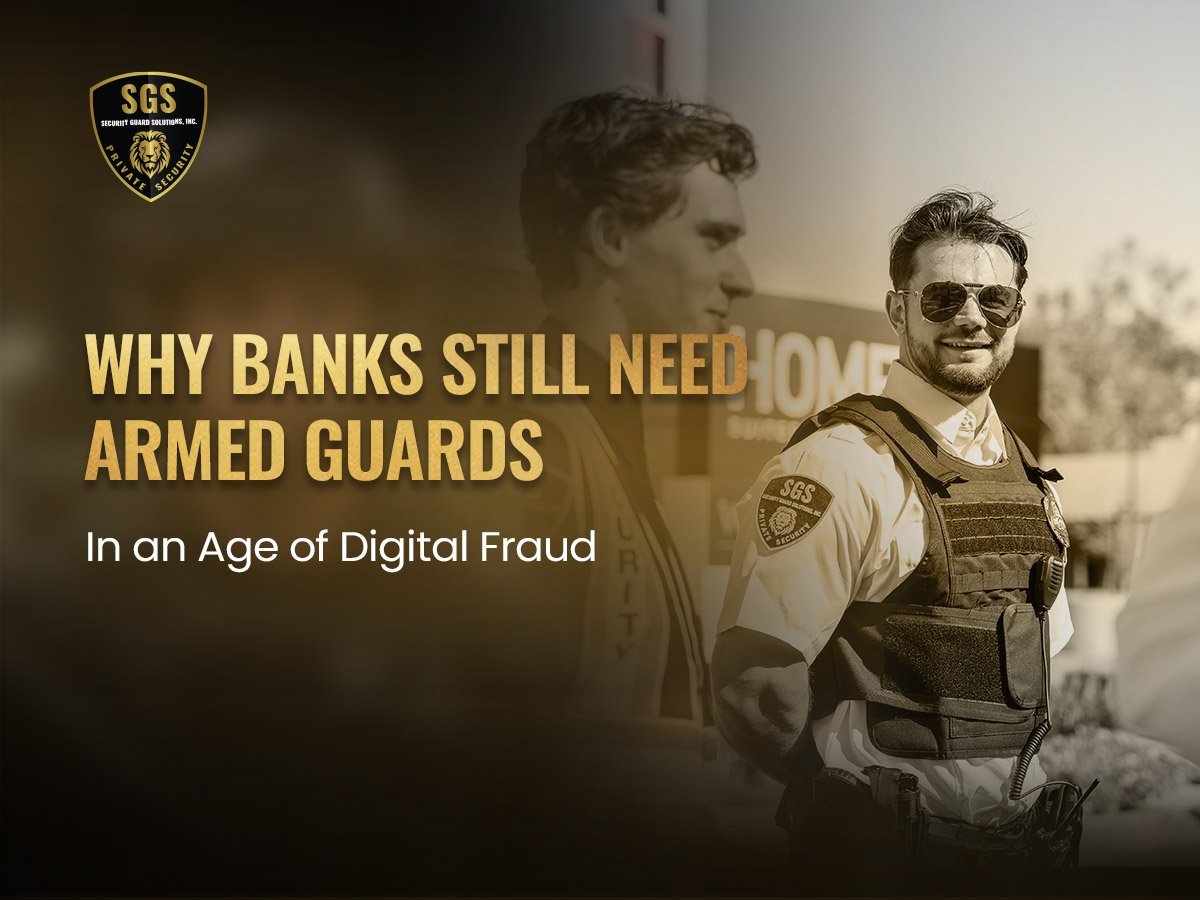
Key Takeaway
- Cybersecurity protects your data, but guards protect human lives.
- Visible armed guards stop bank robberies before they even start.
- Digital firewalls cannot de-escalate violent physical threats in real time.
- Lacking physical security creates massive liability and slow emergency responses.
Physical threats persist despite digital banking growth. On-site armed security guards protect branch staff and customers, deter active robberies, de-escalate customer conflicts, and secure critical physical infrastructure alongside cybersecurity systems.
But here’s the thing. Digital fraud didn’t replace physical risk; it just gave banks a second front to defend. Robberies still happen. Disputes still turn physical.
And when they do, no firewall in the world can step in fast enough. This blog looks at why banks still have security guards, what armed guards actually prevent, and where physical protection fits next to your cybersecurity budget.
Why Do Banks Still Have Security Guards?
It’s a fair question. If most fraud now happens online, why keep a guard posted at the entrance?
Because the threats that guards handle aren’t digital ones: a person walking in with a weapon, a customer who won’t calm down, someone casing the branch before a robbery attempt, none of that shows up on a firewall dashboard.
The responsibility of a security guard in a bank setting covers a lot of ground:
- Monitoring who comes in and out.
- Spotting suspicious behavior before it escalates.
- De-escalating tense situations with customers or staff.
- Responding first when something goes wrong, before police arrive.
Bank security has always meant protecting people first, money second. A guard’s presence changes how a situation unfolds, often before anyone realizes it needed changing.
The Role of Security Guards in Banks Goes Beyond Robbery Prevention
Most people picture a bank guard as someone who exists purely to stop robberies. In practice, the role of security guards in banks is broader than that, and it shows up in small moments most customers never notice.
Guards manage opening and closing procedures. They respond to medical emergencies. They keep an eye on the parking lot after dark. And increasingly, security guards work with access control systems, managing who gets into vaults, server rooms, and staff-only areas that a camera alone can’t gatekeep.
Here’s a quick breakdown of how coverage typically splits:
| Guard Type | Primary Focus | Common Duties |
|---|---|---|
| Armed Security | Deterrence and response | Robbery prevention, weapon response, high-risk monitoring |
| Unarmed Security | Presence and access | Customer assistance, access control, ID verification |
| Standing Guard | Fixed-post monitoring | Entry points, vaults, restricted zones |
How Armed Guards Prevent Bank Robberies
This is the part people underestimate. An armed guard isn’t just a reactive measure, sitting around waiting for something to go wrong. Their presence alone changes the math for anyone considering a robbery.
Think about it from the other side. Someone planning a robbery is weighing risk against reward. A visible, armed presence raises that risk significantly, often enough to make the target unappealing before anything happens.
So, do armed guards deter bank crime? The evidence points to yes, largely because deterrence works best when it’s visible. A locked vault stops a robbery in progress. A guard at the door stops it from being attempted in the first place.
That’s also why how armed guards prevent bank robberies isn’t just about the moment of confrontation. It’s about:
- Discouraging casing and surveillance by would-be robbers.
- Reducing response time if something does happen.
- Giving staff and customers a clear point of authority during a crisis.
- Signaling that the branch takes security seriously, inside and out.
What Happens When Banks Skip Physical Security?
It’s worth asking the harder question. What actually happens when a branch leans entirely on cameras and alarms, and skips a visible security presence altogether?
The short answer is that things take longer to fix, and cost more when they go wrong.
Response Time Slows Down
A camera can record an incident. It can’t step in and stop one. Without someone on-site, the gap between “something’s happening” and “help arrives” stretches out, sometimes by several minutes.
Liability Exposure Grows
If a customer or employee is harmed during an incident and there’s no documented security presence, the branch is in a much harder position to defend.
Reputational Damage Spreads Fast
News of an incident at a bank branch travels quickly, especially locally. Customers notice, and they remember.
Compliance Gets Complicated
Many financial institutions are expected to show documented physical security measures, not just digital ones. Skipping that step can create problems well beyond the incident itself.
None of this means cameras and alarms aren’t useful. They are. But they work best as a layer, not a replacement, for someone who can actually respond.
Physical Security vs Cyber Security in Banking: Why You Need Both
Here’s where a lot of executives get the framing wrong. Physical security vs cyber security in banking isn’t a competition for budget. They solve completely different problems, and a bank that’s strong in one but weak in the other is still exposed.
Cybersecurity stops wire fraud, phishing attempts, and data breaches. It’s essential, and no bank should skimp on it. But it can’t stop someone from walking through the front door with bad intentions. That’s a different kind of risk entirely.
Moreover, the average cost of a cyber breach in the banking industry is about $5.9 million per incident, yet cyber defenses alone cannot prevent physical threats inside a branch.
So, can technology replace security guards? Not really, and here’s a simple way to see why:
| Threat Type | Who Handles It | What It Prevents |
|---|---|---|
| Wire fraud, phishing, hacking | Cybersecurity team | Data breaches, financial theft online |
| In-branch robbery, physical threats | Security guards | Violence, theft, unsafe situations |
| Unauthorized building access | Access control + guards | Vault breaches, restricted area entry |
| Customer disputes, emergencies | On-site security staff | Escalation, injury, liability |
How to Choose the Right Security Guard Company for Your Bank
Not every security provider is built for banking environments, and choosing the wrong one often shows up at the worst possible time. A few things worth checking before you sign anything:
Licensing And State Certification
A business registration isn’t the same as a licensed security operation. Confirm both.
Banking-specific Training
Retail security and bank security aren’t interchangeable. Guards should understand vault protocols, cash handling risks, and how financial branches actually operate day to day.
A Mix of Coverage Options
Armed, unarmed, and standing guard roles all serve different purposes. The right provider should help you figure out what your branch actually needs, not sell you a single package.
Clear Emergency Protocols
Ask how guards are trained to handle robberies, medical emergencies, and access control issues, specifically.
A Track Record with Financial Institutions
References from other banks or credit unions tell you more than a generic client list ever will.
Hiring a licensed security guard company is a smart choice, but only if the company itself understands what a bank actually needs.
What Security Guard Solutions Bring to the Table
We work with banks and financial institutions that understand this balance firsthand. Hiring a licensed security guard company is a wise pick precisely because it means you’re not piecing together coverage on your own, hoping it holds up when it matters.
At Security Guard Solutions, we provide trained armed security, unarmed security, and standing guard coverage built around how your branch actually operates, not a generic template. As an armed security company, we place guards who understand banking environments specifically, not just general retail or corporate settings.
We currently serve several locations throughout California and Texas, and our armed security service page walks through exactly what coverage looks like for financial institutions. If you’re weighing your options, our team is a straightforward call away.
Conclusion
Digital fraud changed how banks defend themselves. It didn’t remove the need for someone standing at the door. Cybersecurity and physical security were never meant to compete for the same budget line; they protect different things entirely.
One guards data, the other guards people, and a branch that’s strong in only one is still exposed somewhere. Armed guards still deter robberies before they’re attempted, not just respond after.
And the role guards play inside a bank has grown well past the old stereotype. The branches that hold up best treat both sides of security as equally necessary, not optional.
Frequently Asked Questions
Why do banks still need physical security guards in a digital age?
Digital defenses only stop online fraud, but physical guards prevent in-branch violence, robbery attempts, and real-time physical security threats.
How do armed security guards prevent bank robberies?
Visible armed guards increase risk for criminals, actively deterring robbery attempts and casing before any physical threat even begins.
Can cybersecurity systems replace physical bank security guards?
No. Cybersecurity stops data breaches and phishing, while physical security protects staff, customers, vaults, and physical assets from violence.
What happens when a bank branch skips physical security?
Branches face slower emergency response times, higher liability risks, reputational damage, and potential non-compliance with financial security standards.
What should banks look for when hiring a security provider?
Choose licensed providers offering financial-specific training, clear emergency protocols, flexible armed or unarmed options, and proven banking experience.