
Key Takeaways
- Fire watch guards focus on prevention, monitoring, and early detection, while firefighters handle fire suppression and emergency response.
- Fire watch services are often legally required when fire systems are offline or during high-risk activities like hot work.
- Firefighters operate at a community level, whereas fire watch guards provide site-specific, continuous oversight.
- Both roles are complementary, not interchangeable, and work together to create a layered fire safety strategy.
Fire safety is a critical concern in any workplace, construction site, or public venue. Which is precisely where fire hazard prevention teams come in. They prevent fires before they occur, and respond effectively to save lives. As a result, enabling people and the relevant security staff to take immediate action.
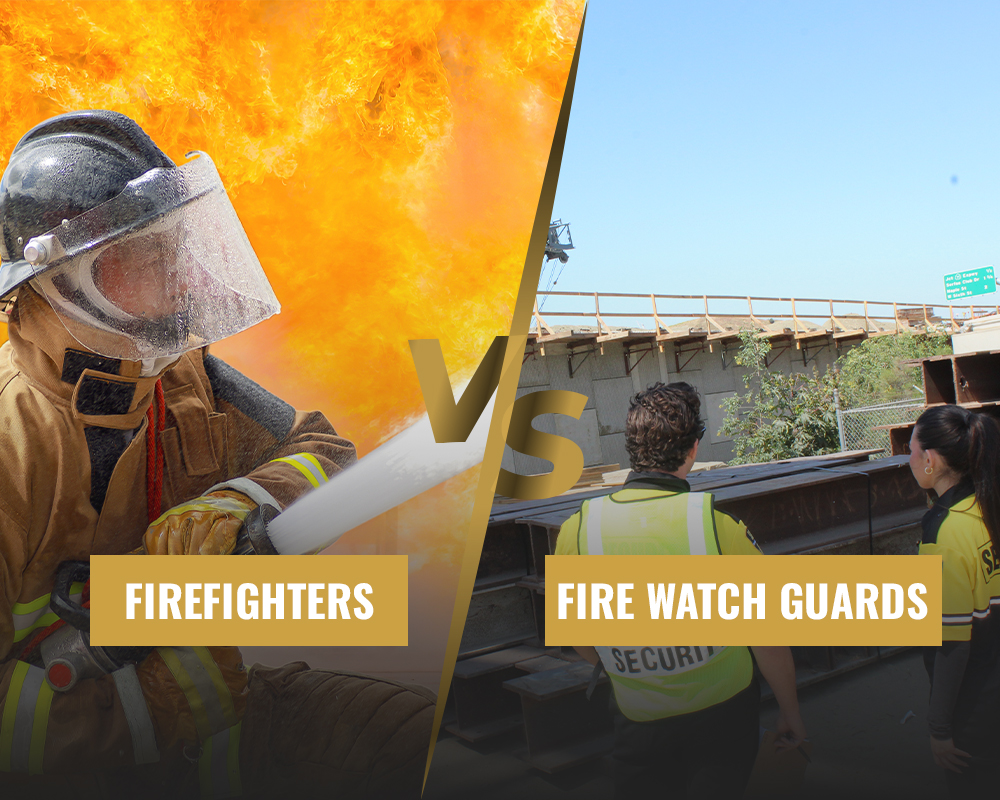
When it comes to fire watch guards vs firefighters, these two are the key roles required in fire protection. While their duties intersect with safety, they differ significantly in scope, training, and legal responsibilities. Understanding these differences between fire watch guards and firefighters is crucial for organizations, construction managers, and property owners. It makes sure that there is compliance with all. Plus, it protects people, their assets, and properties.
In this article, we will explore what fire watch guards and firefighters do, their responsibilities, legal requirements, and how they collaborate to maintain a safe environment.
What Is a Fire Watch Guard?
A fire watch guard is a trained professional whose primary role is to monitor a property, construction site, or facility for fire hazards. Unlike firefighters, they do not actively extinguish fires as their main job, but they serve as an early-warning system and safety presence.
Fire watch guards are often deployed when:
- Fire alarm systems are offline or under maintenance
- Hot work (like welding or cutting) is being performed
- Temporary construction or renovation work increases fire risk
- OSHA or local regulations require continuous fire fire watch guard
Responsibilities of a Fire Watch Guard
The role of a fire watch guard extends beyond simply guarding a site. Typical responsibilities include:
- Continuously monitoring areas prone to fire hazards
- Identifying and reporting potential fire risks
- Ensuring fire extinguishers and suppression equipment are accessible and functional
- Alerting authorities immediately if a fire is detected
- Maintaining detailed logs of inspections, observations, and incidents
- Educating personnel on fire safety protocols when required
Fire watch guards function as the first line of defense against fire, ensuring that potential hazards are addressed promptly before they escalate into emergencies.
Legal Requirements and Compliance
Employers must comply with OSHA fire watch requirements when fire protection systems temporarily unavailable. OSHA mandates that trained personnel are assigned to monitor affected areas continuously, particularly during hot work. Failure to comply can result in fines, penalties, and increased liability in case of fire incidents.
Organizations must also adhere to local fire codes and insurance requirements, which often mandate fire watch coverage during specific operations or system outages.
What Is a Firefighter?
Firefighters are highly trained emergency responders whose primary responsibility is to extinguish fires and perform rescue operations. They are employed by fire departments or emergency services and respond to fire incidents in communities, workplaces, and public areas.
Core Responsibilities of Firefighters
Firefighters are trained to manage a wide range of emergencies. Their core duties include:
- Responding to fires in residential, commercial, or industrial settings
- Containing and extinguishing fires using specialized equipment
- Performing rescues for individuals trapped in dangerous situations
- Providing emergency medical services when needed
- Conducting fire safety inspections and community education
- Participating in fire drills and disaster preparedness programs
Unlike fire watch guards, firefighters are authorized to actively engage in fires, manage hazardous materials, and operate fire suppression systems.
Scope of Work: Community vs Site Safety
Firefighters primarily operate at the community level, responding to emergency calls and managing large-scale incidents. They may also conduct inspections and safety audits in commercial or industrial facilities.
In contrast, fire watch guards focus on site-specific prevention, particularly in temporary or high-risk conditions. Their work ensures that potential hazards are addressed before firefighters are needed.
Need Reliable Fire Protection When Systems Are Down?
Ensure 24/7 safety with professional fire watch guards who patrol, identify hazards, and respond immediately to risks.
Fire Watch Guards Vs Firefighters: Key Differences
Understanding the differences between these two roles is essential for effective fire safety planning. The key distinctions listed in the table below can help people distinguish between fire watch guards and firefighters.
| Feature | Fire Watch Guard | Firefighter |
|---|---|---|
| Primary Role | Fire prevention and monitoring | Fire suppression and emergency response |
| Training | Site-specific fire hazards, OSHA compliance, and equipment use | Emergency response, firefighting techniques, and medical aid |
| Deployment | Temporary or high-risk areas, construction sites | Community-wide, emergency calls, and ongoing fire coverage |
| Legal Requirements | OSHA fire watch mandates, local codes | Fire department certifications, public safety regulations |
| Equipment | Fire extinguishers, communication devices, and inspection tools | Fire hoses, pumps, protective gear, rescue tools |
| Action During Fire | Alert authorities, use basic suppression if needed | Extinguish fire, perform rescues, mitigate hazards |
These differences highlight that fire watch guards serve as a preventive measure, while firefighters are primarily a reactive emergency force. Both roles are complementary but are not interchangeable.
When to Hire a Fire Watch Guard Instead of Relying on Firefighters
While firefighters are essential for emergencies, certain situations require initiative-taking fire watch services. Hiring a fire watch guard is critical when:
- Temporary hazards create elevated fire risk
- Construction sites have hot work operations
- Fire suppression systems are temporarily offline
- Large public events require additional fire monitoring
Fire watch guards provide continuous oversight, ensuring that risks are detected early. This proactive approach often prevents incidents that would otherwise require firefighter intervention.
How Fire Watch Guards and Firefighters Work Together
Although their roles differ, fire watch guards and firefighters collaborate to maintain fire safety:
- Early Detection: Fire watch guards identify hazards and report them immediately, allowing firefighters to respond quickly.
- Communication: Guards maintain clear communication with local fire departments, providing site-specific details.
- Preparedness: Firefighters can plan response strategies based on information from fire watch logs and inspections.
- Training: Fire watch guards often receive guidance from fire departments to enhance their ability to prevent incidents.
This partnership ensures a layered approach to fire safety, combining prevention, monitoring, and rapid response.
Fire Safety Beyond Fire Watch
Fire safety services are not just limited to on-site monitoring. Comprehensive fire watch security responsibilities include, but are not limited to the following:
- Installing and maintaining fire detection and suppression systems
- Training staff in emergency evacuation and fire prevention
- Ensuring compliance with OSHA and local fire codes
- Conducting regular fire risk assessments
- Developing fire response plans and drills
Organizations that integrate these fire safety services with fire watch guards create a robust safety program. It minimizes risk and improves emergency readiness for all.
Conclusion
Fire safety is a complex responsibility requiring a combination of preventive and reactive measures. Fire watch guards and firefighters each play distinct but complementary roles. Fire watch guards focus on detection, monitoring, and prevention. Whereas firefighters oversee emergency response and rescue.
Organizations that understand these fire watch security responsibilities can easily differentiate between fire watch guards and firefighters. Thus, they can easily integrate both roles into their fire safety strategy. This ensures stronger protection for employees, property, and compliance with legal requirements. Initiative-taking monitoring, combined with emergency readiness, creates a safer environment and reduces the risk of devastating fire incidents.
Want a Compliant Fire Watch Coverage?
Get a customized fire watch solution with trained guards, rapid deployment, and full compliance support for your property.
FAQs
What is the main difference between a fire watch guard and a firefighter?
A fire watch guard prevents and detects fire hazards through constant monitoring, while firefighters respond to active fires and emergencies with suppression and rescue operations.
Are fire watch guards legally required?
Yes. OSHA and local fire codes often require fire watch guards when fire alarm or suppression systems are down, or during high-risk activities such as welding or construction work.
Can fire watch guards put out fires?
Fire watch guards may use basic fire extinguishers if safe to do so, but their primary responsibility is to alert authorities immediately and ensure a rapid response.
When should a business hire a fire watch guard?
Fire watch guards are essential during system outages, construction projects, hot work operations, large events, or any situation with elevated fire risk.
Do fire watch guards replace firefighters?
No. Fire watch guards and firefighters serve different roles. Fire watch guards focus on prevention and monitoring, while firefighters handle active emergencies and rescue.