
Key Takeaways
- School security challenges and solutions should be reviewed before daily gaps turn into serious incidents.
- Most campus risks start with simple issues, such as open doors, weak visitor checks, or slow reporting.
- A trained security guard service helps with access control, conflict response, emergency support, and after-hours protection.
- Safer schools need clear plans, tested routines, trained staff, and reliable reporting.
School safety is not something administrators can treat as “handled” after one policy meeting. Every school day brings moving parts: student arrival, parent visits, deliveries, lunch periods, dismissal, sports, and after-hours events. One open side door or unclear response step can create risk quickly.
That is why school security challenges and solutions need steady attention. In this blog, we’ll cover common risks, practical school safety issues and solutions, and the role trained guards can play in keeping students, staff, and visitors safer.
Let’s start with the real issue: safety cannot depend on good intentions alone.
Why School Safety Cannot Depend on Good Intentions Alone
Most schools have caring teams, written rules, and staff who want to do the right thing. Still, safety can break down when people do not know exactly what to do under pressure. A teacher may spot a stranger in the hallway. A front office employee may face an upset visitor. A side gate may stay open during dismissal.
When Small Gaps Turn Into Bigger Risks
These moments need clear steps, not guesswork. School safety and security issues become harder to control when roles are vague or updates move too slowly. Administrators need routines that work during normal days and stressful ones.
Strong school security solutions help the whole campus respond with more confidence. Moving on, let’s look at the most common school security problems administrators should review first.
What Are the Biggest School Security Problems Administrators Face?
School security problems often start in places people see every day. Because they feel familiar, they get missed. The front office gets busy. A door is held open. A student conflict is brushed off as “just drama.”
Where Do Campus Risks Usually Start?
Here are some of the main risks to check first:
- Uncontrolled visitor access: Strangers, vendors, or former students may enter without proper screening.
- Open or propped doors: One side door can bypass your entire front office process.
- Student fights and bullying: Small conflicts can grow into injuries or parent complaints.
- Parking lot risks: Drop-off and pickup can create traffic, arguments, and blind spots.
- After-hours activity: Vandalism, trespassing, and property damage can affect the next school day.
- Weak emergency communication: Staff may hear mixed instructions during a lockdown or evacuation.
Why These Problems Are Easy to Miss
These measures are not about making school feel harsh. They are about finding weak spots before they create harm. Once those risks are clear, the next step is matching each issue with the right response.
Matching School Security Issues with the Right Solutions
Security works best when each problem has a clear fix. Cameras, school security guards, locked doors, visitor badges, radios, and reporting steps all matter. Still, none of them work well alone.
Which Security Response Fits Each Risk?
Here is a simple way to connect school security issues with practical security solutions for schools:
| School Security Issue | What Can Go Wrong | Practical Security Response |
|---|---|---|
| Open side doors | Someone enters without screening | Door checks, staff reporting, access control |
| Busy front office | Visitors move past check-in | ID checks, visitor badges, guard support |
| Student fights | Injury, panic, parent complaints | Visible patrols, de-escalation, fast reporting |
| Parking lot crowding | Unsafe pickup flow or arguments | Traffic support, patrols, camera checks |
| After-hours access | Vandalism or damage | Patrols, alarm response, perimeter checks |
| Poor communication | Confusion during emergencies | Clear chain of command and backup alerts |
This kind of simple chart helps staff see what to do and how to respond to typical school security challenges. Undeniably, security solutions work the best when your team can connect risk with action. But tools and charts still need trained people behind them.
How Can a Security Guard Service Help Schools Stay Safer?
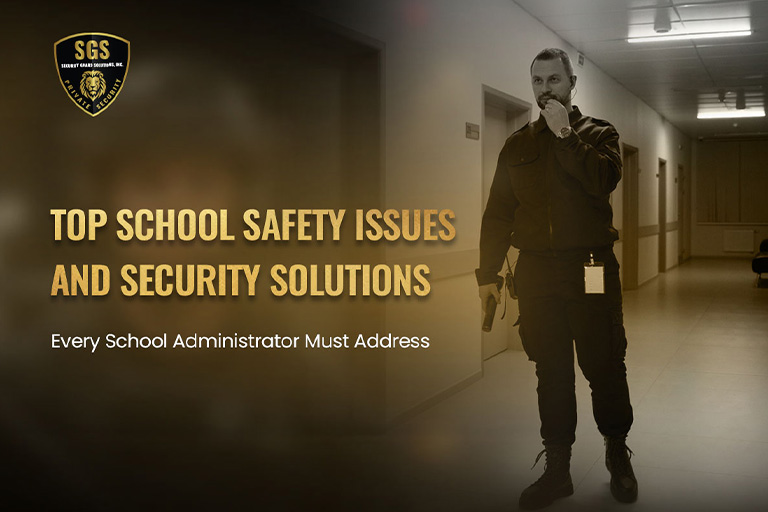
A reliable security guard service adds trained eyes across the campus. Because guards do more than stand near an entrance. They check doors, monitor parking lots, watch visitor flow, support events, and respond when staff need help.
More Than Someone at the Front Door
That matters because administrators and teachers already carry a lot. A teacher should not have to leave class to check a suspicious vehicle. A front office employee should not have to handle an aggressive visitor alone. However, a trained security guard from an experienced security agency can step in, stay calm, document the situation, and contact school leadership when needed.
Why Calm Response Matters
Good guards protect without making the school feel tense. Their presence supports staff, students, and parents while keeping safety routines active. That is a practical part of solutions against school security challenges, especially for schools with busy entry points or large campuses.
What Daily Security Procedures Should Every School Review?
Daily routines are where safety either holds up or breaks down. Many school security problems come from small habits that repeat for weeks. The fix is not always expensive. Often, it starts with making basic checks consistent.
What Should Be Checked Every School Day?
Administrators should review:
- Morning entry checks for students, staff, and visitors.
- Locked door checks after the arrival rush.
- Visitor ID review and badge use.
- Parking lot monitoring during arrival and dismissal.
- Hallway checks during class time and lunch.
- Same-day incident reporting for conflicts or threats.
- End-of-day checks for doors, gates, and outdoor areas.
Why Simple Checks Matter
These steps may look simple, but they close gaps fast. One unchecked door or one unreported conflict can become tomorrow’s bigger issue. School security challenges and solutions depend on these small routines working every day.
How Should Schools Prepare for Active Threats and Lockdowns?
No administrator wants this topic on the table, but it has to be there. According to the K–12 School Shooting Database, there were more than 300 school shooting incidents recorded in the United States during 2022. That number alone shows why active threat planning cannot be vague.
Who Does What During a Lockdown?
A lockdown plan should answer direct questions. Who calls 911? Who locks exterior doors? Who alerts classrooms? Who meets first responders? Who updates district leadership?
How Guards Support the Response
A security guard service can support these steps by securing entry points, giving live updates, and directing police or EMS to the exact location. Drills should also be age-aware and calm. Students need to know what to do without feeling scared every time practice happens.
This part of the school security challenge is serious, but planning helps reduce confusion. Strong communication makes that planning even more useful.
Communication Breakdowns Can Make Emergencies Worse
During an emergency, unclear messaging can create more risk. One staff member may hear “lockdown,” while another hears “hold.” Parents may call before the school has verified facts. First responders may arrive at the wrong gate if no one gives clear directions.
What Should the Communication Chain Include?
A school needs one clear chain of command. Staff should know whether alerts come through radios, phones, intercoms, apps, or panic buttons. Guards should report exact details: location, type of incident, people involved, injuries, and the best access route.
What Should Parents Be Told?
Parent updates should be quick, but they also need to be accurate. It is better to send verified information than rushed messages that create more confusion. Lack of good communication is one of the most practical school security challenges administrators should fix instead of waiting for a crisis.
Access Control, Cameras, and Campus Layout: What Needs Attention?
Campus layout affects safety more than many people think. Doors, gates, parking lots, hallways, playgrounds, fields, and shared spaces all need review. If a visitor can reach student areas without passing the office, that is a problem.
Which Areas Need Better Visibility?
Cameras should cover entry points, parking areas, hallways, and outdoor gathering spots. Lighting matters too, especially for evening events, sports, and after-school programs. A guard can report damaged locks, poor lighting, blind spots, and repeated access issues.
Why Security Tools Still Need Human Follow-Through
Security tools only work when people use them. A camera no one checks or a door that keeps getting propped open will not help much. This is why school security solutions must connect equipment with daily behavior.
Building a Practical School Safety Plan That People Actually Follow
A school safety plan should be clear enough for real use. If it is too long or too hard to read, staff may not rely on it during a stressful moment. Keep the plan direct, role-based, and easy to review.
What Should the Plan Cover?
A practical plan should cover:
| Safety Plan Area | What to Include | Who Should Know |
|---|---|---|
| Visitor access | ID checks, badges, denied entry steps | Office staff, guards, administrators |
| Student conflict | Reporting, de-escalation, parent contact | Teachers, guards, counselors |
| Medical events | 911 steps, AED location, nurse contact | All staff and guards |
| Lockdowns | Alert method, room response, door control | All staff and students |
| Evacuations | Routes, muster points, headcounts | Staff, guards, students |
| After-hours safety | Patrols, alarms, event coverage | Guards, admin, facilities |
How Often Should the Plan Be Reviewed?
A security guard service should be part of safety meetings and drill reviews. Guards often notice problems that staff miss because they see the campus from a different angle. When plans are reviewed after drills, incidents, or layout changes, schools keep improving without waiting for a crisis.
Conclusion
In a nutshell, school safety works best when people, tools, and procedures support each other. Administrators should review access points, daily routines, emergency communication, after-hours risks, and response plans before an incident exposes weak spots.
A trained guard adds real value by spotting early risks, supporting staff, managing access, and helping during emergencies. School security challenges and solutions should never be treated like a one-time project. They need review, testing, and steady action.
If your campus needs stronger safety coverage, reach out to SGS. At Security Guard Solutions, our team can help you build a guard plan that protects students, supports staff, and fits the daily needs of your school.
FAQs
What are the most common school safety risks administrators should address first?
Start with visitor access, open doors, student fights, bullying, parking lot safety, after-hours activity, and emergency communication.
Do schools need both cameras and on-site guards?
In many cases, yes. Cameras help record and review incidents, but guards respond in real time. They can guide visitors, calm tense situations, support lockdowns, and help responders reach the right place.
How often should a school review its safety plan?
Review it at least once per semester. You should also review it after every drill, after any real incident, and whenever campus-related routines change.