Key Takeaway
- Armed security costs more due to training, permits, and insurance.
- High-risk sites with cash or high-value assets need armed guards.
- Unarmed guards effectively handle daily deterrence, patrols, and incident reporting.
- Combining guard types optimizes property safety and overall security budgets.
Armed and unarmed guards balance risk against budget, protecting critical assets with firearms or managing everyday properties through visible deterrence.
Sites with cash, valuables, or serious threats need them. Most other properties do fine with unarmed guards. This guide explains armed vs. unarmed security in plain terms, covers what each one costs, and helps you pick the right fit.
What Is the Difference Between Armed and Unarmed Security?
Before talking money, it helps to see what the money buys.
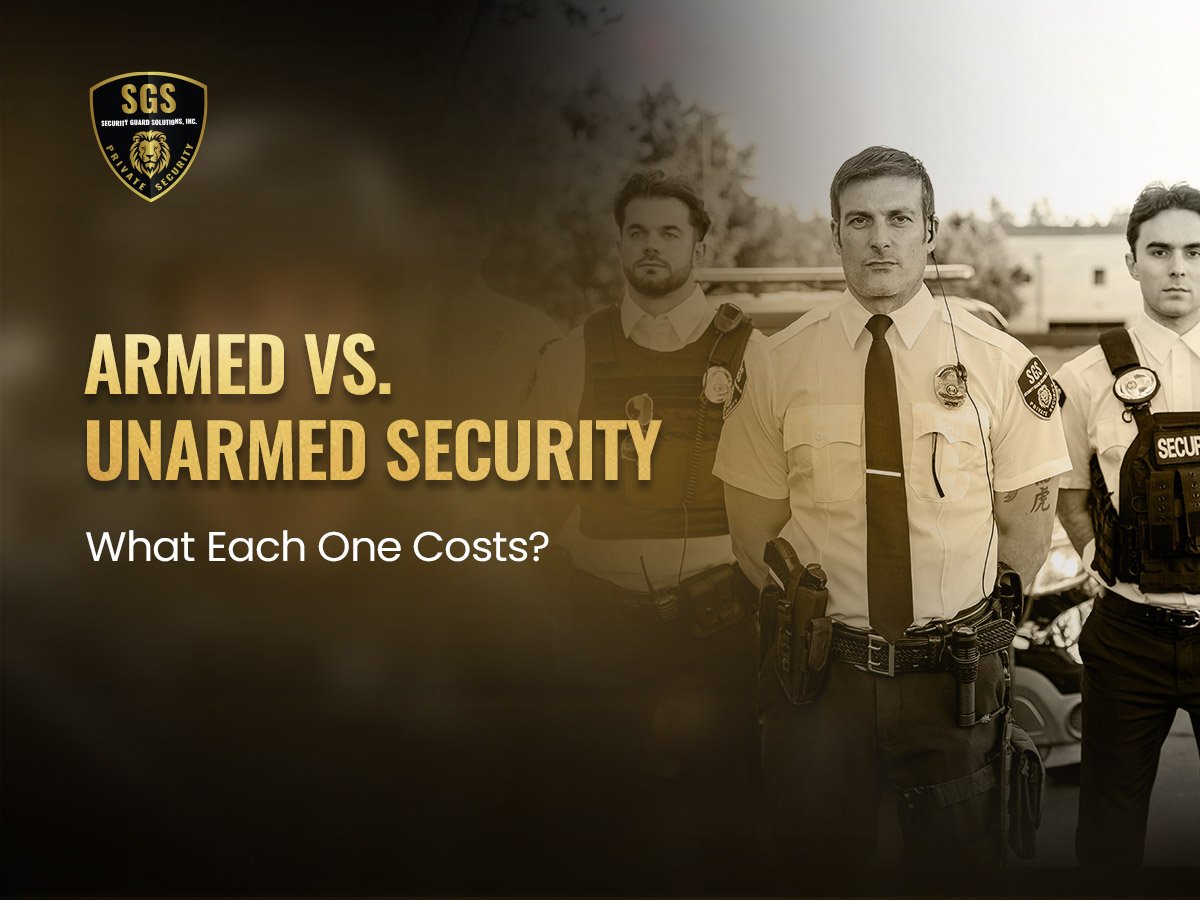
The difference between armed and unarmed security starts with what the guard carries and how much training backs it up. Armed security officers carry a firearm. As a result, they need added permits and regular range practice. Unarmed security officers rely on presence, communication, and reporting instead.
- Armed guards: Firearm, live-fire training, extra state permits, higher liability.
- Unarmed guards: Uniform, radio, patrol tools, focus on deterrence.
- Both: Watch entrances, check the property, and write daily activity reports.
Naturally, those extras show up on the invoice.
How Much Does Armed vs Unarmed Security Cost?
Prices change by city, contract, and shift, so exact numbers vary from quote to quote. The U.S. had approximately 1.28 million security guard jobs in May 2025, with a median annual wage of about $38,020, according to the Bureau of Labor Statistics.
Still, the pattern stays the same. Here is what pushes each price up or down.
What Shapes Unarmed Security Cost
Unarmed security cost mostly follows hours and workload. A quiet office at night costs less than a busy site with constant foot traffic.
- Number of guards and hours per week.
- Night, weekend, and holiday shifts.
- Site size and number of entry points.
- Extra duties like escorts or access control.
Why Armed Security Costs More
Armed security costs more because the job carries more risk. Moreover, the guard needs more preparation before the first shift.
- Firearm permits and range training.
- Higher insurance premiums.
- Higher pay for qualified officers.
- More supervision and paperwork.
The armed vs. unarmed security guard cost gap can look steep at first. However, the price tag alone decides nothing. A cheaper guard who cannot handle your real risk costs more later.
A Quick Side-by-Side Look
| Factor | Unarmed Guard | Armed Guard |
|---|---|---|
| Hourly Bill Rate | $20 – $35 / hr | $35 – $60+ / hr |
| Annualized Cost (24/7 coverage) | ~$175,000 – $300,000 / yr | ~$300,000 – $525,000+ / yr |
| Training Requirements | Basic state licensing (8-40 hrs) & site protocol | Basic licensing + firearm certification & live-fire range hours |
| Insurance Impact | Standard commercial general liability | Elevated premiums due to firearm exposure |
| Primary Role | Access control, deterrence & reporting | Immediate armed response to violent threats & high-value protection |
When Do You Need Armed Security?
So, when do you need armed security? Usually when violence is a real possibility or the value at stake is very high. A few cases make the call easy.
- Banks and cash handling: Cameras and alarms help, yet banks still need armed guards because a trained, visible response changes how a robbery unfolds.
- Remote sites: Solar farms need armed security guards to stop copper theft, since thieves move fast and help sits miles away.
- High-value stock: Jewelry stores, pharmacies, and busy warehouses often carry this risk.
- Past incidents: A site with a history of threats or assaults deserves a serious look.
That said, armed does not always mean safer. A firearm adds liability, and some landlords or insurers prefer unarmed guards. It seems like the smartest move is matching the guard to the actual threat, not the scariest one you can picture.
Is Unarmed Security Enough for Your Property?
For many properties, yes. Most incidents involve trespassing, petty theft, vandalism, or a rowdy visitor. A visible guard stops much of that before it starts.
Think of a lifeguard chair at a pool. The presence alone keeps people careful. When something goes wrong, the lifeguard calls for help fast.
Unarmed guards fit well at:
- Office buildings and business parks.
- Apartment and condo communities.
- Retail stores and malls.
- Hotels and restaurants.
- Construction sites and events.
So, is unarmed security enough? If the site holds no cash or high-value stock, it usually is. However, coverage still matters, and that is where patrols come in.
Patrol Options That Stretch Your Budget
Different types of security patrols let you cover a large site without paying for a guard at every door.
- Foot patrols for parking lots and buildings.
- Vehicle patrols for large properties.
- Mobile patrol checks at random times.
- Static posts at gates or lobbies.
Random timing matters more than most owners expect. After all, thieves study routines.
How to Choose Between the Two
Start with a few honest questions. Then match the answers to the guard.
- What sits on the property: cash, stock, or equipment?
- Who visits, and at what hours?
- Has the site seen threats or break-ins before?
- Does your insurer have requirements?
- What budget can you keep up all year?
| Situation | Better Fit |
|---|---|
| Bank branch or cash office | Armed |
| Remote solar site or equipment yard | Armed |
| Office building or apartment complex | Unarmed |
| Retail store or hotel | Unarmed |
| Higher-risk site with daytime traffic | Mix: unarmed by day, armed by night |
In short, armed vs. unarmed security is not always an either-or choice. Many sites run a mix, and that often gives the best balance.
How Security Guard Solutions Can Help
Many owners guess the guard type, then pay too much or cover too little. Both mistakes hurt.
We see this often across California and Texas. That is why we start with a free consultation and security assessment before quoting prices. Our team of retired military and law enforcement personnel provides armed and unarmed guards, along with mobile patrols, 24-hour supervision, and daily activity reports. Moreover, we cover California and Texas. We believe a straight quote helps everyone decide faster.
Conclusion
Armed vs unarmed security comes down to risk first and price second. Armed guards cost more because of training, permits, and insurance, and they earn that cost at banks, remote sites, and places holding high-value goods. Unarmed guards handle most everyday properties well, especially when patrols fill the gaps.
The right answer usually shows up after an honest look at what needs protecting and who is around it. A site assessment makes that look easier.
Frequently Asked Questions
What is the primary difference between armed and unarmed security guards?
Armed guards carry firearms, requiring advanced permits, live-fire training, and higher insurance, while unarmed guards focus on access control, visible deterrence, reporting, and communication.
Why does armed security cost more than unarmed security?
Armed security costs more due to higher officer pay rates, specialized firearm licensing, mandatory range training, strict regulatory compliance, and elevated liability insurance premiums.
When should a business hire armed security officers?
Hire armed security for high-risk environments involving cash handling, high-value assets, remote critical infrastructure (e.g., solar farms), or properties with histories of violent threats.
Is unarmed security sufficient for commercial and residential properties?
Yes. Unarmed security provides cost-effective deterrence, entry monitoring, and incident reporting for office buildings, apartment complexes, retail locations, and general construction sites without firearm liability.
Can a property combine armed and unarmed security services?
Yes. Mixing security models, such as deploying unarmed guards for daytime visitor management and armed guards or mobile patrols for overnight surveillance, optimizes safety and budget.