
Key Takeaways
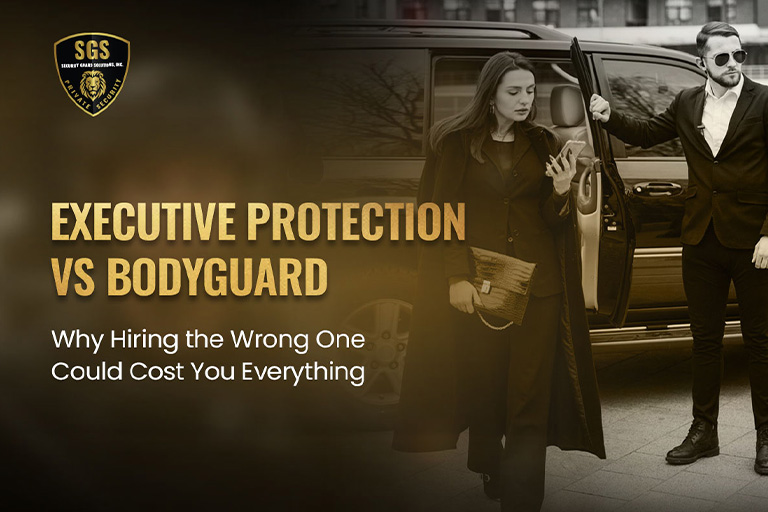
- The difference between executive protection vs bodyguard support comes down to planning, risk level, and the type of threat involved.
- A bodyguard is usually more visible and close-range, while executive protection looks at the full picture around a person’s safety.
- Hiring the wrong type of protection can create gaps in travel, public events, family safety, or workplace security.
- Before choosing either option, consider whether your biggest concern is immediate physical protection or preventing security problems before they happen.
Do you need someone to stand beside you, or someone to identify risks before they reach you? That question is where many people get the executive protection vs bodyguard decision wrong.
A bodyguard focuses on close physical protection, crowd control, and immediate response. Executive protection looks wider, covering travel routes, venue entry, hotel exits, schedules, drivers, staff coordination, and possible threats before they get close.
This guide explains what each role does, where each one fits, and how choosing the wrong option can leave serious gaps in your safety plan.
Why the Wrong Protection Choice Can Put More Than Safety at Risk
The wrong security choice can create problems long before a threat gets physical. You may lose time because routes were not checked, face public embarrassment at an event entrance, or put staff in a panic because no one knows who is handling what.
In some cases, poor coverage can also create legal exposure if a situation is handled badly.
What Can Go Wrong When Coverage Does Not Match the Risk?
A visible guard may help in a crowd, but that may not be enough for a high-profile executive with travel, schedule, and public exposure risks. On the other hand, a full protection plan may be too much for a short personal escort.
The executive protection vs bodyguard choice matters because parking areas, hotels, offices, homes, and event entrances all carry different risks. Wrong-fit security can make you feel covered while leaving the real gaps open.
Next, let’s define both roles in plain terms, so the difference is easier to see.
Executive Protection vs Bodyguard: What Each Role Actually Means
People often use these terms as if they mean the same thing, but they cover different levels of risk. The easiest way to understand the executive protection vs bodyguard difference is to look at what each role is built to do.
What Does a Bodyguard Usually Do?
A bodyguard usually focuses on close physical protection. Their job is to stay near the client and respond if a direct threat appears.
A bodyguard may:
- Escort you through crowds or public spaces.
- Keep people at a safe distance.
- Stand near entrances, vehicles, or stage areas.
- Respond quickly if someone becomes aggressive.
- Provide visible protection for short-term or high-crowd situations.
Bodyguard security services are usually a good fit when you need direct, visible, close-range protection.
What Is the Difference Between a Bodyguard and Executive Protection?
Executive protection covers a wider safety plan. It looks beyond the person standing beside you and focuses on the risks around your movement, schedule, and environment.
Executive protection may include:
- Route checks before travel.
- Risk review based on the schedule.
- Venue, hotel, and parking area checks.
- Coordination with drivers, staff, or event teams.
- Schedule control to reduce avoidable exposure.
- Emergency planning before the client arrives.
So, what is the difference between a bodyguard and executive protection? A bodyguard protects you up close. Executive protection services plan around the risk before it reaches you.
A Practical Comparison of Bodyguard and Executive Protection Support
A quick side-by-side view helps when the choice still feels a little blurry. The executive protection vs bodyguard difference is not about which security service sounds more serious. It is about how much planning, coordination, visibility, and risk control your unique situation needs.
Which Option Fits Your Situation Better?
| Factor | Bodyguard | Executive Protection |
|---|---|---|
| Main focus | Close physical protection | Full safety planning |
| Visibility | Often visible | Can be discreet or visible |
| Best for | Direct escort, events, crowd control | Executives, travel, public exposure, ongoing risk |
| Planning level | Basic to moderate | High, with advance work |
| Common tasks | Escort, access control, immediate response | Risk review, route planning, schedule safety, response planning |
| Service fit | Bodyguard security services | Executive protection services |
If your concern is direct and short-term, a bodyguard may be enough. If your risk involves movement, schedule, travel, or public exposure, executive protection is usually the safer fit.
Now, let’s look at when a bodyguard is the right call.
When Do You Need Bodyguard Security Services?
A bodyguard is the right call when the risk is close, visible, and likely to happen in the moment. You may not need a full advance plan. You may just need trained protection beside you when people, attention, or tension get too close.
Is Your Risk Immediate, Visible, or Short-Term?
Bodyguard security services make sense for public events, VIP appearances, personal disputes, nightlife, red-carpet settings, or crowded locations. A bodyguard creates a clear physical barrier, manages distance, controls access, and responds fast if someone becomes aggressive or crosses a line.
When choosing executive protection or bodyguard support, ask one simple question: Is the threat spontaneous and temporary, or does it involve travel, planning, staff, and public exposure? If it is the second one, the next conversation matters more.
When Do You Need Executive Protection Services?
Executive protection is the better fit when safety depends on planning before you step out, not just protection once you arrive. This applies when your schedule, business role, public profile, family concerns, or known threats create risks across more than one location.
Does Your Safety Depend on Planning Before You Arrive?
Executive protection services are often used by CEOs, business owners, public figures, high-net-worth families, and people dealing with credible threats. The team may conduct a standardized risk assessment, check travel routes, review venue access, inspect parking areas, plan around meeting rooms, and emergency exits before the client arrives.
The goal is simple: Reduce risk before it reaches the client. In the executive protection vs bodyguard decision, planning is often the dividing line. If the risk follows your schedule, travel, or public presence, close protection alone may not be enough.
What Can Choosing the Wrong Security Type Cost You?
The wrong security choice rarely fails in a quiet, obvious way. It usually fails at the worst possible moment with a:
- Blocked exit.
- Rushed arrival.
- Aggressive person, too close.
- Confused team with no clear plan.
The Cost Is Bigger Than the Invoice
Choosing the wrong protection can lead to:
- Exposed travel routes: No one checks the route, parking area, drop-off point, or back exit before you arrive.
- Public embarrassment: A tense moment gets handled poorly in front of guests, cameras, clients, or staff.
- Lost time: Delays at entrances, hotels, venues, or meeting sites can throw off your entire day.
- Staff confusion: Drivers, assistants, event teams, and guards may act on different instructions.
- Legal trouble: A confrontation handled badly can create complaints or unwanted attention.
- False confidence: You feel covered, but the real risk sits outside the guard’s assigned role.
When comparing close protection vs executive protection, the costliest mistake is paying for coverage that looks right but does not match the threat.
Now, let’s look at how Security Guard Solutions helps clients choose the right coverage before those gaps become expensive.
How Security Guard Solutions Helps You Choose the Right Protection
Security Guard Solutions starts with the real risk, not a preset package. In the executive protection vs bodyguard decision, that matters because every client’s situation is different.
A Fit-First Approach to Personal Security
Our team reviews your lifestyle, public exposure, travel needs, event type, location, family concerns, and known threats before recommending coverage. Some clients need bodyguard security services for close-range support.
Others need executive protection services with planning and discreet coverage. The goal is simple: match the protection to the risk, not sell more than you need.
Conclusion
In a nutshell, bodyguards are best when you need close, visible, and immediate protection. Executive protection is the better fit when your risk involves travel, public exposure, schedules, staff, or planning before arrival. The wrong choice can leave serious gaps, even if the coverage looks strong from the outside.
If you are comparing executive protection vs bodyguard support, Security Guard Solutions can help you choose the right level of coverage. Contact us for a protection review and service recommendation built around your actual risk.
FAQs
What is the difference between a bodyguard and executive protection?
A bodyguard usually focuses on close physical protection. Executive protection includes wider planning, such as routes, venues, schedules, threat review, and emergency response.
Is executive protection only for CEOs?
No. It can also fit business owners, public figures, families, legal teams, and anyone facing higher personal or public risk.
Is a bodyguard enough for public events?
Sometimes, yes. For a simple appearance or short-term escort, a bodyguard may be enough. For a larger risk, you may need advance planning too.